Classic pilocytic astrocytoma
pī-lō-SIT-ik as-troh-sy-TOH-muh
Also known as: Juvenile pilocytic astrocytoma, JPA
At a Glance
What is Classic pilocytic astrocytoma?
Classic pilocytic astrocytoma is a type of brain tumor that typically occurs in children and young adults. It primarily affects the central nervous system, particularly the brain and spinal cord. The tumor arises from astrocytes, which are star-shaped glial cells that support nerve cells. It is generally considered a slow-growing tumor and is classified as a Grade I tumor by the World Health Organization. Early symptoms may include headaches, nausea, and balance problems, while late symptoms can involve vision disturbances and seizures. Early diagnosis is crucial for effective treatment and to prevent complications. The condition can be challenging for families, as it may require long-term medical care and monitoring. With appropriate treatment, the prognosis is often favorable, and many individuals can lead normal lives. Surgery is the primary treatment, and complete removal often results in a cure. Radiation or chemotherapy may be considered if the tumor cannot be fully resected. Daily life for affected individuals may involve regular follow-up appointments and monitoring for any signs of recurrence. Support from healthcare professionals and family is essential to manage the condition effectively.
Medical Definition
Classic pilocytic astrocytoma is a benign, well-circumscribed glioma characterized by its slow growth and low-grade histological features. Histologically, it is defined by the presence of bipolar cells with long hair-like processes, Rosenthal fibers, and eosinophilic granular bodies. It is classified as a Grade I tumor according to the World Health Organization classification of central nervous system tumors. Epidemiologically, it is the most common brain tumor in children, with a peak incidence in the first two decades of life. The pathological mechanism involves alterations in the MAPK pathway, often due to genetic mutations such as BRAF. The disease course is generally favorable with surgical resection, although recurrence can occur if the tumor is not completely removed.
Classic pilocytic astrocytoma
Classic pilocytic astrocytoma Symptoms
Symptoms vary in severity between individuals. Early diagnosis and management can significantly improve outcomes.
Very Common
Headaches in classic pilocytic astrocytoma often present as persistent and progressively worsening pain, typically more severe in the morning. This symptom is primarily caused by increased intracranial pressure due to tumor growth. Over time, the headaches may become more frequent and intense, potentially leading to nausea and vomiting. Daily life can be significantly affected, and management may include medications like analgesics and corticosteroids to reduce inflammation and pain.
Nausea and vomiting are common symptoms resulting from increased intracranial pressure affecting the brain's vomiting center. The biological mechanism involves the compression of brain structures that regulate nausea and the stimulation of the chemoreceptor trigger zone. As the tumor grows, these symptoms may become more persistent and severe, often accompanying headaches. They can disrupt daily activities and nutrition, with treatment options including antiemetic medications and dietary adjustments.
Visual disturbances can manifest as blurred vision, double vision, or loss of peripheral vision, depending on the tumor's location. These symptoms occur due to the compression of the optic pathways or increased intracranial pressure affecting the visual cortex. Over time, visual symptoms may worsen, potentially leading to significant visual impairment. This can affect daily tasks like reading and driving, with management strategies including ophthalmologic evaluations and possible surgical intervention to relieve pressure.
Common
Seizures in patients with pilocytic astrocytoma can vary from focal to generalized, depending on the tumor's location and size. They are caused by abnormal electrical activity in the brain tissue surrounding the tumor. Over time, seizures may increase in frequency and severity if the tumor is not managed effectively. This can significantly impact the patient's quality of life, necessitating the use of antiepileptic drugs and possible surgical resection of the tumor.
Cognitive changes may include difficulties with memory, attention, and problem-solving skills. These symptoms arise from the tumor's pressure on brain regions responsible for cognitive functions. As the tumor progresses, cognitive impairments may become more pronounced, affecting academic and occupational performance. Cognitive rehabilitation and supportive therapies can help manage these changes and improve daily functioning.
Patients may experience balance and coordination problems, often presenting as unsteady gait or difficulty with fine motor tasks. These symptoms are caused by the tumor's impact on the cerebellum or other motor pathways. Over time, these issues may worsen, leading to increased risk of falls and difficulty performing daily activities. Physical therapy and occupational therapy can aid in managing these symptoms and improving mobility.
Less Common
Hormonal imbalances can occur if the tumor affects the hypothalamus or pituitary gland, leading to symptoms like growth abnormalities or menstrual irregularities. The mechanism involves disruption of normal endocrine function due to tumor pressure or infiltration. These imbalances may develop gradually and vary depending on the hormones affected. Management may include hormone replacement therapy and regular endocrinological assessments.
Hearing loss may occur if the tumor is located near the auditory pathways or cranial nerves involved in hearing. The biological mechanism involves compression or damage to these structures, leading to partial or complete hearing loss. This symptom may progress slowly and can affect communication and social interactions. Audiological evaluations and hearing aids or other assistive devices can help manage this symptom.
What Causes Classic pilocytic astrocytoma?
Classic pilocytic astrocytoma is primarily associated with mutations in the BRAF gene, located on chromosome 7q34. The BRAF gene encodes a protein called B-Raf, which is a serine/threonine-protein kinase involved in the MAPK/ERK signaling pathway. Mutations such as the BRAF V600E result in constitutive activation of the B-Raf protein, leading to uncontrolled cell proliferation. This mutation causes continuous activation of the MAPK pathway, bypassing normal regulatory mechanisms. As a result, there is increased cellular proliferation and survival, contributing to tumor growth. The disruption in signaling pathways can lead to altered cellular metabolism and energy production, affecting mitochondrial function. Neighboring cells and tissues experience increased pressure and altered nutrient availability due to the expanding tumor mass. Neuroinflammation is often observed, with microglial activation contributing to the tumor microenvironment. The immune response can exacerbate tissue damage and contribute to the progression of the disease. White matter degeneration occurs due to the compression and infiltration of tumor cells, disrupting normal neural connectivity. Symptoms such as headaches, nausea, and visual disturbances arise from increased intracranial pressure and specific tumor location. The pattern of symptoms is influenced by the tumor's location and size, affecting specific brain regions. Disease severity varies due to genetic heterogeneity, tumor location, and individual patient factors such as age and overall health. The presence of additional genetic aberrations can further influence tumor behavior and patient outcomes.
How is Classic pilocytic astrocytoma Diagnosed?
Typical age of diagnosis: Classic pilocytic astrocytoma is typically diagnosed in children and young adults, often presenting with symptoms related to increased intracranial pressure or focal neurological deficits. Diagnosis usually occurs following the onset of symptoms such as headaches, nausea, or visual disturbances, prompting further investigation.
The clinician looks for symptoms such as headaches, nausea, vomiting, and visual disturbances, which are indicative of increased intracranial pressure. A thorough medical history is taken to identify any previous neurological issues or family history of brain tumors. Physical examination may reveal papilledema or focal neurological deficits, guiding the clinician towards a possible intracranial lesion. This step helps determine the need for further imaging studies to confirm the presence of a brain tumor.
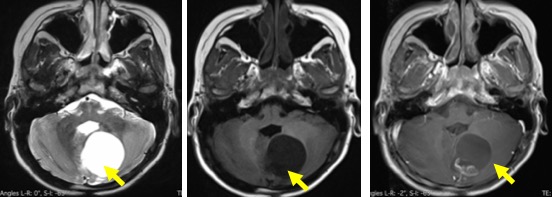
Magnetic Resonance Imaging (MRI) is the preferred modality for evaluating suspected pilocytic astrocytoma. MRI typically shows a well-circumscribed, cystic lesion with an enhancing mural nodule, often located in the cerebellum. These imaging characteristics are highly suggestive of pilocytic astrocytoma, helping to confirm the diagnosis. Differential diagnoses such as medulloblastoma or ependymoma are excluded based on the distinct imaging features of pilocytic astrocytoma.
Specific laboratory tests, such as cerebrospinal fluid analysis, may be ordered to rule out other conditions. Biomarkers like elevated protein levels or the presence of tumor cells can be indicative of a central nervous system tumor. Abnormal results, such as elevated protein or the presence of atypical cells, support the diagnosis of a brain tumor. These results guide the clinician towards further genetic testing to confirm the diagnosis.
Genetic testing often involves sequencing the BRAF gene, as mutations in this gene are common in pilocytic astrocytomas. The most frequently found mutation is the BRAF-KIAA1549 fusion, which is characteristic of this tumor type. Genetic testing results confirm the diagnosis by identifying these specific mutations, providing a molecular basis for the disease. This information is crucial for family counseling, as it helps assess the risk of recurrence or familial predisposition.
Classic pilocytic astrocytoma Treatment Options
Chemotherapy may be used in cases where surgical resection is not possible or in recurrent tumors. Agents such as vincristine and carboplatin are commonly used, targeting rapidly dividing tumor cells. Clinical evidence suggests that chemotherapy can help reduce tumor size and control symptoms, especially in younger patients. However, side effects such as myelosuppression and neuropathy can limit its use. Long-term efficacy is variable, and chemotherapy is often used in conjunction with other treatment modalities.
Neurological rehabilitation involves techniques such as balance training, coordination exercises, and strength training. The therapeutic goal is to improve motor function and enhance quality of life following treatment. Sessions are typically conducted 2-3 times per week over several months, depending on individual needs. Measurable outcomes include improved mobility, reduced fatigue, and enhanced daily functioning. Long-term benefits include better integration into daily activities and improved overall well-being.
Surgical resection is indicated for accessible tumors causing significant symptoms or mass effect. The procedure involves the removal of the tumor, often achieving complete resection due to the well-circumscribed nature of pilocytic astrocytomas. Expected benefits include symptom relief and potential cure, especially in cases of complete resection. Surgical risks include infection, bleeding, and neurological deficits, which are carefully managed with perioperative care. Post-operative care involves monitoring for complications and rehabilitation to address any functional impairments.
The care team typically includes neurologists, oncologists, neurosurgeons, and rehabilitation specialists. Specific interventions focus on symptom management, nutritional support, and cognitive rehabilitation. Psychosocial support strategies involve counseling and support groups for both patients and families. Family education is provided to help manage expectations and facilitate home care. Long-term monitoring includes regular follow-ups to assess tumor status and address any emerging complications.
When to See a Doctor for Classic pilocytic astrocytoma
- Severe headache — this could indicate increased intracranial pressure, requiring immediate medical attention.
- Sudden vision changes — could signify tumor growth affecting the optic pathways, necessitating urgent evaluation.
- Seizures — may indicate neurological compromise and require emergency intervention.
- Persistent nausea and vomiting — may suggest increased intracranial pressure; consult a healthcare provider.
- Progressive weakness or numbness — could indicate tumor progression; seek medical advice.
- Balance difficulties — may be a sign of cerebellar involvement; a medical evaluation is recommended.
- Mild headache — monitor for changes in frequency or intensity and consult if worsening.
- Fatigue — track energy levels and discuss with a doctor if it impacts daily activities.
Classic pilocytic astrocytoma — Frequently Asked Questions
Is this condition hereditary?
Classic pilocytic astrocytoma is generally not considered hereditary and typically occurs sporadically. The probability of passing it to children is low as it is not linked to a known inheritance pattern. De novo mutations can occur, leading to the development of the tumor. Carrier status is not applicable since it is not a hereditary condition. Genetic counseling may be recommended for families with multiple affected members to explore any underlying genetic predispositions.
What is the life expectancy for someone with this condition?
Life expectancy for individuals with classic pilocytic astrocytoma is generally favorable, especially when diagnosed in childhood. Prognosis can vary based on factors such as tumor location and resectability. Mortality is often related to complications such as tumor recurrence or progression. Treatment, particularly surgical resection, significantly improves survival rates. Patients and families should maintain realistic expectations, focusing on regular monitoring and management.
How is this condition diagnosed and how long does diagnosis take?
Diagnosis of classic pilocytic astrocytoma involves imaging studies like MRI, followed by biopsy for histological confirmation. The time from first symptoms to diagnosis can vary, often taking weeks to months. Specialists involved typically include neurologists, neurosurgeons, and radiologists. Delays in diagnosis may occur due to the non-specific nature of early symptoms. A definitive diagnosis is confirmed through histopathological examination of tumor tissue.
Are there any new treatments or clinical trials available?
Current research is exploring targeted therapies that inhibit the MAPK pathway, which is frequently altered in these tumors. Gene therapy and novel drug approaches are under investigation, offering potential future treatment options. Clinical trials can be found on ClinicalTrials.gov, where patients can search by condition and location. It is important to discuss with your doctor the suitability and availability of trials. New treatments may take several years to become widely available, depending on trial outcomes.
How does this condition affect daily life and activities?
Classic pilocytic astrocytoma can impact mobility and self-care, particularly if located in areas affecting motor function. Educational implications may arise if cognitive functions are affected, requiring special accommodations. Social and emotional challenges include coping with a chronic condition and potential isolation. The family burden can be significant, necessitating support and resources. Adaptive strategies and support services, such as physical therapy and counseling, are crucial for improving quality of life.
Learn More
Support & Resources
References
Content generated with support from peer-reviewed literature via PubMed.
- 1.Molecular characterization of disseminated pilocytic astrocytomas.
Gessi M, Engels AC, Lambert S et al. · Neuropathol Appl Neurobiol · 2016 · PMID: 26084390
- 2.Metachronous, multicentric glioma of pilocytic astrocytoma with oligodendroglioma-like component and oligodendroglioma through distinct genetic aberrations.
Kanoke A, Kanamori M, Kumabe T et al. · J Neurosurg · 2013 · PMID: 23082883
- 3.The morphologic and molecular characteristics of pilocytic astrocytomas and the role of MAPK pathway: what does not kill you makes you stronger.
Aktas ON, Tihan T · Adv Anat Pathol · 2014 · PMID: 24508697
- 4.[An unusual and misleading form of pilocytic astrocytoma].
Burel-Vandenbos F, Jouvet A, Chanalet S et al. · Ann Pathol · 2006 · PMID: 16791125
- 5.[Pilomyxoid astrocytoma: a clinicopathologic study of three cases].
Chen L, Wang Y, Zhu XZ · Zhonghua Bing Li Xue Za Zhi · 2006 · PMID: 17374256
This content is for educational purposes only and is not a substitute for professional medical advice, diagnosis, or treatment.Last reviewed: 2026-05-05