Stiff skin syndrome
stif skin sin-drohm
Also known as: Congenital fascial dystrophy, Scleroderma-like syndrome
At a Glance
What is Stiff skin syndrome?
Stiff skin syndrome is a rare genetic disorder characterized by hardening of the skin, making it difficult to move. It primarily affects the skin and musculoskeletal system, leading to restricted joint movement. The condition is caused by mutations in genes that affect connective tissue, leading to excessive collagen deposition. Over time, the skin becomes progressively stiffer, and joint contractures may develop. Early symptoms include skin thickening and reduced flexibility, while later symptoms can involve significant mobility issues. Early diagnosis is crucial to manage symptoms and prevent complications. The condition can impact family life as affected individuals may require assistance with daily activities. Prognosis varies, but many individuals maintain a normal lifespan with appropriate management. Daily life may involve physical therapy and adaptations to maintain mobility. The condition does not typically affect internal organs, unlike other scleroderma-like disorders. Psychological support may be beneficial due to the chronic nature of the disease. Families may need genetic counseling to understand inheritance patterns and risks for future children.
Medical Definition
Stiff skin syndrome is a connective tissue disorder characterized by diffuse induration and thickening of the skin due to excessive collagen deposition. Histologically, it shows increased collagen bundles in the dermis and subcutaneous tissue. The condition is classified based on the extent and distribution of skin involvement, as described in recent classification systems. Epidemiologically, it is an extremely rare disorder with autosomal dominant inheritance. The disease course is progressive, with symptoms typically appearing in early childhood and worsening over time. Management focuses on symptomatic relief and maintaining joint mobility through physical therapy.
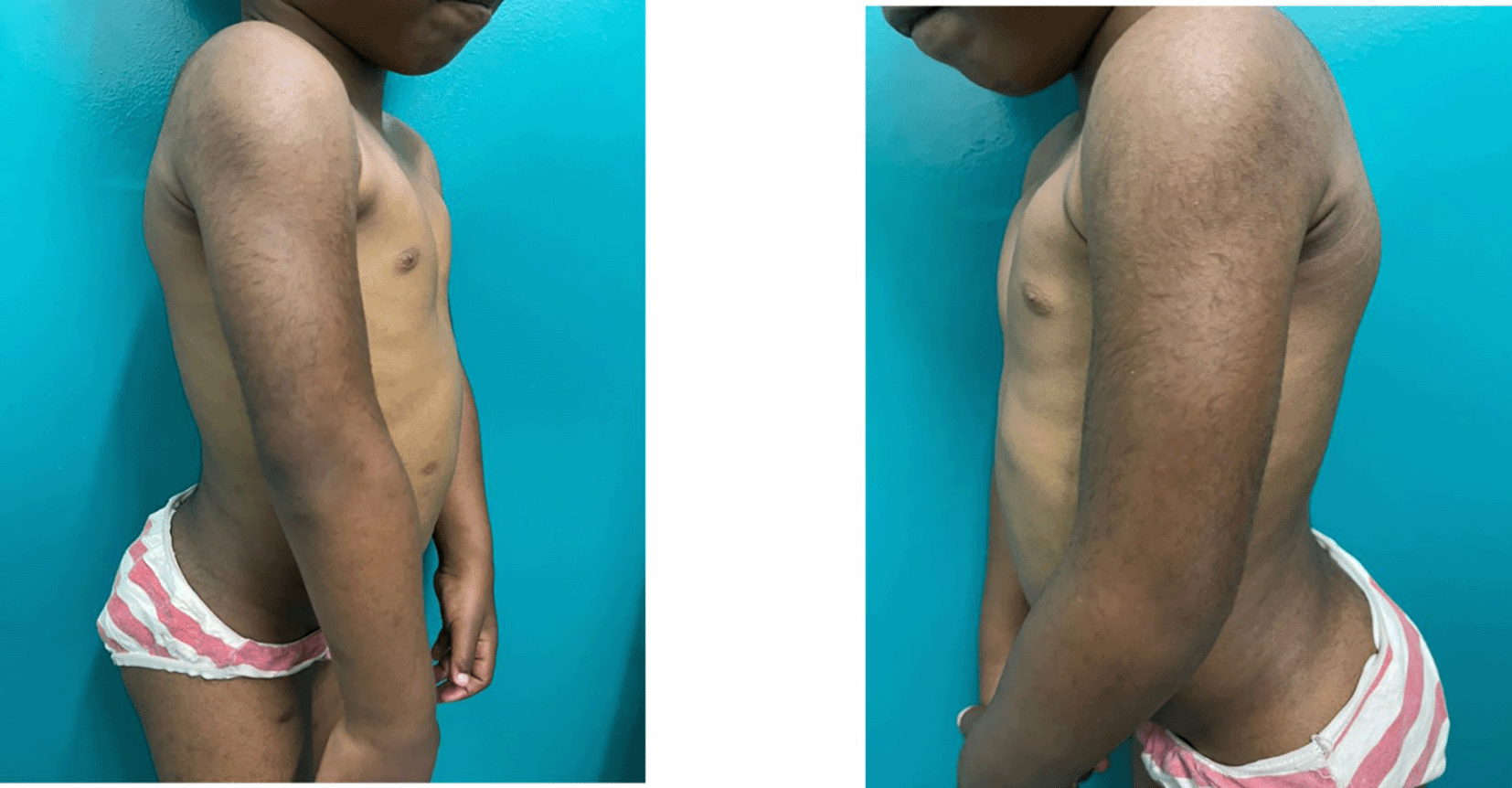
Stiff skin syndrome
Stiff skin syndrome Symptoms
Symptoms vary in severity between individuals. Early diagnosis and management can significantly improve outcomes.
Very Common
Skin thickening manifests as a hardening and tightening of the skin, particularly on the trunk and extremities. This is caused by excessive collagen deposition in the dermis. Over time, the skin becomes less elastic and more rigid, potentially leading to restricted movement. Daily life is affected as mobility can be impaired, and physical therapy may help maintain range of motion.
Joint stiffness presents as difficulty in moving joints, often accompanied by pain. The stiffness results from the skin's reduced elasticity and the involvement of underlying connective tissues. As the condition progresses, joint mobility decreases, which can lead to functional limitations. Regular exercise and physical therapy can help manage stiffness and maintain joint function.
Limited range of motion is observed as a decreased ability to move joints through their full range. This occurs due to the thickened skin and fibrosis affecting the underlying tissues and joints. Over time, the limitation can worsen, affecting daily activities such as dressing and walking. Occupational therapy and adaptive devices can assist in managing these limitations.
Common
Muscle weakness is characterized by reduced strength and endurance in affected muscles. It is often secondary to the restricted movement imposed by skin and joint stiffness. As the condition progresses, muscle atrophy may occur due to disuse. Strengthening exercises and physical therapy are crucial in managing muscle weakness.
Fatigue presents as a persistent feeling of tiredness and lack of energy. It can be attributed to the increased effort required to perform daily activities due to stiffness and limited mobility. Over time, fatigue can significantly impact quality of life and daily functioning. Adequate rest, energy conservation techniques, and a balanced diet can help manage fatigue.
Pain is often experienced as a result of skin tightness and joint stiffness. The pain is due to mechanical stress on the skin and joints as well as possible inflammation. As the condition progresses, pain may become more persistent and debilitating. Pain management strategies include medications, physical therapy, and relaxation techniques.
Less Common
Respiratory difficulties can occur if the skin thickening affects the chest wall, leading to restricted lung expansion. This is due to the reduced elasticity and compliance of the chest skin and underlying tissues. Over time, breathing may become more labored, especially during physical exertion. Respiratory therapy and exercises can help improve lung function and breathing efficiency.
Facial changes may include a mask-like appearance due to skin tightening around the face. This is caused by collagen accumulation in facial tissues, leading to reduced expression and movement. As the condition progresses, these changes can affect communication and social interactions. Supportive treatments, such as speech therapy, can assist in managing these changes.
What Causes Stiff skin syndrome?
Stiff skin syndrome is primarily associated with mutations in the FBN1 gene located on chromosome 15q21.1. The FBN1 gene encodes fibrillin-1, a crucial component of the extracellular matrix that provides structural support to connective tissues. Mutations in FBN1 can lead to the production of defective fibrillin-1, which disrupts the formation of microfibrils and compromises tissue integrity. This disruption results in altered cellular signaling and impaired mechanical stability of the skin. Consequently, the extracellular matrix becomes abnormally rigid, affecting the normal function of fibroblasts and other cells. The stiffness and reduced elasticity of the skin can trigger an abnormal immune response, leading to chronic inflammation. Neuroinflammation may further exacerbate the condition by affecting peripheral nerves and contributing to sensory abnormalities. Over time, the degeneration of connective tissue structures, including potential impacts on white matter integrity, can occur. The specific pattern of symptoms, such as skin thickening and joint contractures, arises from the localized accumulation of defective fibrillin-1 and subsequent tissue fibrosis. Variability in disease severity among patients is influenced by the type and location of the FBN1 mutation, as well as potential environmental and genetic modifiers. Additionally, the involvement of other pathways and organelles, such as those regulating collagen synthesis and degradation, may contribute to the phenotype. The role of the immune system in perpetuating fibrosis and inflammation further complicates the clinical presentation. Understanding the precise molecular mechanisms remains an area of active research, with ongoing studies exploring the interplay between genetic, cellular, and environmental factors. This complexity underscores the heterogeneity observed in clinical manifestations and disease progression.
How is Stiff skin syndrome Diagnosed?
Typical age of diagnosis: Stiff skin syndrome is typically diagnosed in early childhood, often before the age of five, when parents or caregivers notice unusual skin stiffness and limited joint mobility. Diagnosis may occur later if symptoms are mild or misinterpreted as other conditions.
The clinician looks for characteristic skin thickening and induration, particularly on the trunk and proximal limbs. A detailed history is taken to identify any familial patterns or associated symptoms. Physical examination reveals limited joint mobility and possible growth retardation. This step helps differentiate stiff skin syndrome from other scleroderma-like conditions.
MRI is the imaging modality of choice to assess the extent of skin and subcutaneous tissue involvement. It reveals thickened dermis and subcutis, confirming the diagnosis of stiff skin syndrome. Findings help exclude differential diagnoses such as systemic sclerosis or morphea. Imaging also aids in assessing the severity and planning further management.
Laboratory tests may include serum markers such as ANA, which are typically negative in stiff skin syndrome. Elevated inflammatory markers are not characteristic, helping to exclude inflammatory arthropathies. Abnormal results guide clinicians to consider other connective tissue disorders. These tests are supportive and help refine the differential diagnosis.
Genetic testing involves sequencing the FBN1 gene, as mutations here are associated with stiff skin syndrome. Missense mutations are commonly identified, confirming the diagnosis. Results provide definitive confirmation and are crucial for genetic counseling. They also inform family planning and risk assessment for other family members.
Stiff skin syndrome Treatment Options
Immunosuppressants are used to manage skin and joint symptoms. They work by modulating the immune response to reduce inflammation and fibrosis. Methotrexate and mycophenolate mofetil are commonly used drugs. Clinical evidence suggests moderate efficacy in slowing disease progression. Limitations include potential side effects such as liver toxicity and increased infection risk.
Physical therapy involves specific techniques such as stretching and strengthening exercises. The goal is to maintain joint mobility and prevent contractures. Sessions are typically conducted 2-3 times per week, each lasting about an hour. Measurable outcomes include improved range of motion and functional ability. Long-term benefits include enhanced quality of life and reduced disability.
Surgery is indicated in severe cases with debilitating contractures. Fasciotomy involves cutting the fascia to release tension and improve mobility. Expected benefits include increased range of motion and pain relief. Surgical risks include infection, scarring, and recurrence of contractures. Post-operative care involves intensive physical therapy to maintain surgical gains.
The care team typically includes dermatologists, rheumatologists, physical therapists, and genetic counselors. Interventions focus on symptom management, mobility enhancement, and psychosocial support. Strategies include counseling, education about the condition, and coping mechanisms. Family education is crucial for home care and adherence to therapy. Long-term monitoring involves regular follow-ups to assess disease progression and treatment efficacy.
When to See a Doctor for Stiff skin syndrome
- Sudden difficulty breathing — this can indicate respiratory involvement and requires immediate medical attention.
- Severe skin tightening causing restricted movement — this may lead to complications such as joint contractures and needs urgent evaluation.
- Acute onset of muscle weakness — could signify systemic involvement and necessitates emergency care.
- Progressive skin hardening — important to monitor as it may indicate worsening of the condition; consult a dermatologist.
- Joint stiffness — can lead to decreased mobility and should be assessed by a healthcare provider.
- Persistent pain in affected areas — may suggest complications and warrants a medical review.
- Mild skin changes — monitor for progression and maintain regular dermatological check-ups.
- Occasional joint discomfort — observe for any increase in frequency or severity and discuss with a doctor if it worsens.
Stiff skin syndrome — Frequently Asked Questions
Is this condition hereditary?
Stiff skin syndrome can be inherited in an autosomal dominant pattern, meaning one copy of the altered gene in each cell is sufficient to cause the disorder. The probability of passing it to children is 50% if one parent is affected. De novo mutations, which are new mutations not inherited from either parent, can also occur. Carrier status implications are less relevant as it is not typically a recessive condition. Genetic counseling is recommended for affected families to understand inheritance patterns and risks.
What is the life expectancy for someone with this condition?
Life expectancy can vary depending on the severity and age of onset, with earlier onset often associated with more severe outcomes. Factors such as the degree of skin and systemic involvement can worsen outcomes, while early intervention and management can improve quality of life. Mortality is usually related to complications such as respiratory or cardiac involvement. Treatment can significantly improve survival by managing symptoms and preventing complications. Realistic expectations include a need for ongoing medical care and possible adaptations in daily life.
How is this condition diagnosed and how long does diagnosis take?
Diagnosis involves a combination of clinical evaluation, skin biopsy, and genetic testing. The time from first symptoms to diagnosis can vary, often taking months to years due to the rarity of the condition. Dermatologists and geneticists are typically consulted during the diagnostic process. Delayed diagnosis is common due to symptom overlap with other conditions and lack of awareness. Confirmation is usually achieved through genetic testing identifying specific mutations.
Are there any new treatments or clinical trials available?
Current research is exploring gene therapy and other novel approaches to treat stiff skin syndrome. Promising areas include the use of targeted therapies that address the underlying genetic mutations. Clinical trials can be found on ClinicalTrials.gov by searching for 'stiff skin syndrome'. Patients should ask their doctors about eligibility for trials and potential benefits. New treatments may become available in the next few years, but timelines can vary.
How does this condition affect daily life and activities?
Stiff skin syndrome can significantly impact mobility and self-care due to skin and joint involvement. Educational implications may arise if the condition affects a child's ability to participate in school activities. Social and emotional challenges include coping with a visible condition and potential mobility limitations. Family burden can be significant, requiring adaptations and support. Supports such as physical therapy, adaptive devices, and counseling can help manage daily challenges.
Learn More
Support & Resources
References
Content generated with support from peer-reviewed literature via PubMed.
- 1.Segmental stiff skin syndrome (SSS): Clinical case and a brief review.
Cerejeira D, Bonito F, António AM et al. · Australas J Dermatol · 2021 · PMID: 33769553
- 2.Stiff skin syndrome.
Geng S, Lei X, Toyohara JP et al. · J Eur Acad Dermatol Venereol · 2006 · PMID: 16836505
- 3.Stiff skin syndrome: a clinicopathological study of 31 cases.
Wen X, Chen F, Wang L · Eur J Dermatol · 2023 · PMID: 37594328
- 4.Stiff skin syndrome: long-term follow-up.
Baka JLCES, Rocha TOCD, Pincelli MS et al. · An Bras Dermatol · 2024 · PMID: 38664099
- 5.New clinical classification of stiff skin syndrome.
Zhao Q, Chu Z, Li L et al. · Arch Dermatol Res · 2024 · PMID: 38844593
- 6.Stiff-skin syndrome.
Ferrari D, Rossi R, Donzelli O · Chir Organi Mov · 2005 · PMID: 16422231
- 7.Acromicric dysplasia with stiff skin syndrome-like severe cutaneous presentation in an 8-year-old boy with a missense FBN1 mutation: Case report and literature review.
Wang T, Yang Y, Dong Q et al. · Mol Genet Genomic Med · 2020 · PMID: 32406602
- 8.Stiff skin syndrome.
Kikuchi I, Inoue S, Hamada K et al. · Pediatr Dermatol · 1985 · PMID: 2933643
This content is for educational purposes only and is not a substitute for professional medical advice, diagnosis, or treatment.Last reviewed: 2026-05-04