Cholera
koh-luh-ruh
Also known as: Asiatic cholera, Epidemic cholera
At a Glance
What is Cholera?
Cholera is a bacterial infection caused by Vibrio cholerae, primarily affecting the intestines. It is transmitted through contaminated water or food, often in areas with poor sanitation. The disease can progress rapidly, with symptoms appearing within hours to days after exposure. Early symptoms include diarrhea and vomiting, which can lead to severe dehydration if not treated promptly. As the disease progresses, symptoms can include muscle cramps and shock. Early diagnosis is critical to prevent severe dehydration and potential death. Cholera can have a significant impact on family life, especially in areas where outbreaks are common, as it can spread quickly among household members. The prognosis is good with prompt treatment, typically involving rehydration therapy. Daily life for affected individuals can be challenging during outbreaks, with a need for increased hygiene measures to prevent spread. In endemic regions, cholera can be a recurring threat, requiring ongoing public health efforts. Vaccination and improved sanitation are key to controlling outbreaks. Education on safe water and food practices is essential to prevent infection.
Medical Definition
Cholera is an acute diarrheal illness caused by infection of the intestine with the gram-negative bacterium Vibrio cholerae. Pathologically, it is characterized by the rapid loss of fluids and electrolytes due to the action of cholera toxin on the intestinal lining, leading to watery diarrhea. Histologically, there is no significant invasion of the intestinal mucosa, but there is a massive loss of fluids and electrolytes. Cholera is classified into endemic and epidemic forms, with the former being persistent in certain regions and the latter occurring as outbreaks. Epidemiologically, cholera is prevalent in regions with inadequate water treatment, poor sanitation, and overcrowding. The disease course can be rapid, with severe cases leading to death within hours if untreated, but it is highly treatable with prompt rehydration therapy.
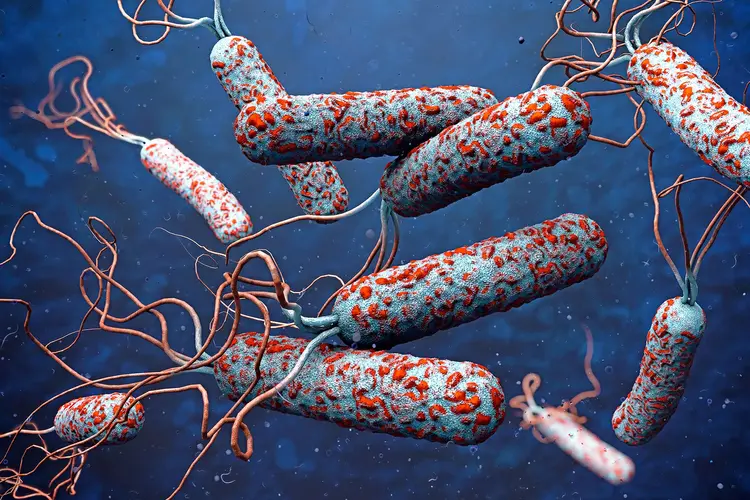
Cholera
Cholera Symptoms
Symptoms vary in severity between individuals. Early diagnosis and management can significantly improve outcomes.
Very Common
Watery diarrhea manifests as frequent, voluminous, and watery stools that can lead to rapid dehydration. The biological mechanism involves the cholera toxin causing the intestines to secrete excessive amounts of water and electrolytes. Over time, if untreated, this can lead to severe dehydration and electrolyte imbalances. It affects daily life by causing weakness and fatigue, and immediate rehydration therapy is crucial to prevent severe complications.
Vomiting in cholera is characterized by sudden and forceful expulsion of stomach contents. This occurs due to the body's response to the cholera toxin and the irritation of the gastrointestinal tract. As the condition progresses, vomiting can exacerbate dehydration and electrolyte loss. It disrupts daily activities by causing discomfort and weakness, and antiemetic medications can be used to manage it.
Muscle cramps are painful contractions of muscles, often occurring in the legs and abdomen. They result from the rapid loss of electrolytes, particularly sodium, potassium, and chloride, due to diarrhea and vomiting. These cramps can become more frequent and severe as dehydration worsens. They impact daily life by causing significant pain and discomfort, and replenishing electrolytes can help alleviate them.
Common
Dehydration manifests as dry mouth, thirst, decreased urine output, and sunken eyes. It is caused by the rapid loss of fluids and electrolytes through diarrhea and vomiting. If not addressed, dehydration can progress to shock and organ failure. It severely affects daily life by causing fatigue and confusion, and oral rehydration solutions are essential for management.
Thirst is an intense desire to drink fluids, often accompanied by a dry mouth and throat. It occurs as the body attempts to compensate for fluid loss due to diarrhea and vomiting. As dehydration progresses, thirst becomes more pronounced. It affects daily life by causing discomfort and distraction, and adequate fluid intake is necessary to satisfy it.
A rapid heart rate, or tachycardia, is an abnormally fast heartbeat. It results from the body's attempt to maintain blood pressure and circulation despite fluid loss. As dehydration worsens, the heart rate may continue to increase. It impacts daily life by causing palpitations and fatigue, and rehydration is crucial to stabilize the heart rate.
Less Common
Low blood pressure, or hypotension, presents as dizziness, fainting, and weakness. It is caused by the reduced blood volume due to fluid loss from diarrhea and vomiting. As dehydration progresses, blood pressure can drop further, leading to shock. It affects daily life by causing lightheadedness and fatigue, and fluid resuscitation is necessary to restore normal pressure.
Sunken eyes appear as hollowed or recessed eye sockets, often accompanied by dark circles. This occurs due to dehydration and the loss of skin turgor. As fluid loss continues, the appearance of sunken eyes becomes more pronounced. It affects daily life by indicating severe dehydration, and prompt rehydration is needed to reverse this symptom.
What Causes Cholera?
Cholera is caused by the bacterium Vibrio cholerae, which does not involve a specific human gene or chromosomal location. The bacterium produces a toxin known as cholera toxin, which is encoded by the ctxAB operon located on the bacterial chromosome. The cholera toxin is an AB5-type enterotoxin that disrupts normal cellular function by ADP-ribosylating the Gs alpha subunit of the adenylate cyclase complex. This modification leads to constitutive activation of adenylate cyclase, resulting in increased cyclic AMP (cAMP) levels inside intestinal epithelial cells. Elevated cAMP levels cause the CFTR chloride channels to open, leading to excessive secretion of chloride ions into the intestinal lumen. The osmotic gradient created by chloride ion secretion results in the efflux of water and sodium ions, causing severe diarrhea. The massive loss of fluids and electrolytes leads to dehydration and electrolyte imbalance, which are the primary clinical manifestations of cholera. The immune response to Vibrio cholerae involves both innate and adaptive components, but excessive inflammation can exacerbate tissue damage. While cholera primarily affects the gastrointestinal tract, systemic effects can occur due to severe dehydration and electrolyte disturbances. The pattern of symptoms, such as rice-water stools and rapid dehydration, is due to the direct action of the toxin on intestinal cells. Variability in disease severity among patients can be attributed to factors such as host immune status, genetic predisposition, and the presence of other comorbidities. The absence of direct neuroinflammation or white matter degeneration distinguishes cholera from diseases with neurological involvement. Effective management of cholera involves rapid rehydration and electrolyte replacement to prevent complications. Understanding the molecular mechanisms of cholera toxin action has been crucial in developing preventive and therapeutic strategies.
How is Cholera Diagnosed?
Typical age of diagnosis: Cholera is typically diagnosed in individuals of all ages, but outbreaks often affect children and young adults in endemic areas. Diagnosis usually occurs when a patient presents with acute watery diarrhea, especially in regions where cholera is known to occur. Rapid identification is crucial during outbreaks to initiate prompt treatment and control measures. Diagnosis is often confirmed in a clinical setting using specific laboratory tests.
Clinicians look for signs of severe dehydration, such as sunken eyes and dry mouth, in patients with acute watery diarrhea. A history of recent travel to or residence in an area with a cholera outbreak is significant. Physical examination may reveal rapid pulse, low blood pressure, and lethargy. This step helps prioritize immediate rehydration and guides further diagnostic testing.
Imaging studies are not typically used in the diagnosis of cholera, as the condition is primarily identified through clinical and laboratory findings. However, in cases of severe dehydration, ultrasound may be used to assess kidney function and fluid status. Imaging can help exclude other causes of acute abdomen or bowel obstruction. The absence of specific imaging findings for cholera underscores the importance of clinical and laboratory assessments.
Stool cultures are the primary laboratory test, seeking the presence of Vibrio cholerae bacteria. Rapid diagnostic tests can detect cholera antigens in stool samples, providing quicker results. Abnormal results include the isolation of V. cholerae or positive rapid test results, confirming the diagnosis. These results guide the initiation of appropriate antimicrobial therapy and public health interventions.
Genetic testing is not typically used for diagnosing cholera, as it is an infectious disease rather than a genetic disorder. However, research into the genetic makeup of V. cholerae can identify mutations that confer antibiotic resistance. These findings can confirm the presence of resistant strains and inform treatment strategies. Genetic insights also aid in understanding transmission dynamics and developing targeted vaccines.
Cholera Treatment Options
Antibiotics such as doxycycline and azithromycin are used to reduce the duration of diarrhea and bacterial shedding. They work by inhibiting bacterial protein synthesis or cell wall synthesis. Clinical evidence shows that antibiotics can shorten illness duration and reduce transmission in outbreaks. However, their use is limited by potential side effects like nausea and the risk of antibiotic resistance. Antibiotics are typically reserved for severe cases or vulnerable populations.
Oral rehydration therapy (ORT) involves the use of oral rehydration salts (ORS) to replace lost fluids and electrolytes. The goal is to prevent dehydration and maintain electrolyte balance. ORT is administered frequently in small amounts, with the duration depending on the severity of dehydration. Measurable outcomes include improved hydration status and reduced mortality. Long-term benefits include the prevention of complications related to severe dehydration.
Surgical intervention is not a standard treatment for cholera, as it is primarily managed with medical therapies. However, in rare cases of intestinal complications, surgery may be indicated. The procedure would aim to address bowel obstruction or perforation. Surgical risks include infection and complications from anesthesia. Post-operative care would focus on continued rehydration and monitoring for complications.
The care team typically includes physicians, nurses, nutritionists, and public health workers. Interventions focus on rehydration, nutritional support, and monitoring for complications. Psychosocial support strategies involve counseling and community education to reduce stigma. Family education emphasizes hygiene practices and recognizing early signs of dehydration. Long-term monitoring plans include follow-up visits and community surveillance to prevent future outbreaks.
When to See a Doctor for Cholera
- Severe dehydration — This is an emergency because it can lead to shock and organ failure if not treated immediately.
- Persistent vomiting — This is critical as it can exacerbate dehydration and electrolyte imbalances.
- Profuse watery diarrhea — This can rapidly lead to life-threatening dehydration and requires urgent medical intervention.
- Moderate dehydration — This is concerning as it can progress to severe dehydration; seek medical advice promptly.
- Fever — This may indicate an infection that needs medical evaluation.
- Muscle cramps — This suggests electrolyte imbalances that require medical assessment.
- Mild diarrhea — Monitor fluid intake and ensure adequate hydration at home.
- Mild stomach cramps — Monitor for worsening symptoms and maintain hydration.
Cholera — Frequently Asked Questions
Is this condition hereditary?
Cholera is not hereditary and does not follow any inheritance pattern. The probability of passing it to children is nonexistent as it is an infectious disease. De novo mutations are not relevant to cholera. Carrier status does not apply because it is caused by a bacterial infection. Genetic counseling is not necessary for cholera.
What is the life expectancy for someone with this condition?
Life expectancy depends on the promptness of treatment; untreated cholera can be fatal within hours. Factors such as access to medical care and rehydration solutions improve outcomes significantly. Mortality is primarily caused by severe dehydration and electrolyte imbalances. With proper treatment, survival rates are very high, and patients can recover fully. Realistically, with timely intervention, most individuals can expect a full recovery.
How is this condition diagnosed and how long does diagnosis take?
Cholera is diagnosed through stool cultures or rapid diagnostic tests. Diagnosis can occur within hours to a few days from the onset of symptoms. Infectious disease specialists or general practitioners are typically consulted. Delayed diagnosis may occur in areas with limited access to healthcare. Confirmation is achieved through laboratory testing of stool samples.
Are there any new treatments or clinical trials available?
Current research focuses on improving vaccines and developing oral rehydration solutions. Novel approaches like gene therapy are not applicable to cholera. Clinical trials can be found on ClinicalTrials.gov by searching for 'cholera.' Discuss potential participation in trials with your healthcare provider. New treatments are continually being developed, but current therapies are highly effective.
How does this condition affect daily life and activities?
Cholera can temporarily impact mobility and self-care due to dehydration and weakness. Educational activities may be disrupted during illness. Social and emotional challenges include isolation during outbreaks. Family burden increases with the need for care and prevention measures. Supportive adaptations include access to clean water and sanitation facilities.
Learn More
Support & Resources
References
Content generated with support from peer-reviewed literature via PubMed.
- 1.Diagnosis, Management, and Future Control of Cholera.
Chowdhury F, Ross AG, Islam MT et al. · Clin Microbiol Rev · 2022 · PMID: 35726607
- 2.Cholera.
Clemens JD, Nair GB, Ahmed T et al. · Lancet · 2017 · PMID: 28302312
- 3.Cholera.
Shears P · Ann Trop Med Parasitol · 1994 · PMID: 8067806
- 4.[Cholera].
Fournier JM, Quilici ML · Presse Med · 2007 · PMID: 17336031
- 5.Cholera in travellers: a systematic review.
Connor BA, Dawood R, Riddle MS et al. · J Travel Med · 2019 · PMID: 31804684
- 6.Cholera Infection Risks and Cholera Vaccine Safety in Pregnancy.
El Hayek P, Boueri M, Nasr L et al. · Infect Dis Obstet Gynecol · 2023 · PMID: 37260611
- 7.Cholera.
Raufman JP · Am J Med · 1998 · PMID: 9576414
- 8.[Cholera: recent acquisitions].
Nardiello S, Ilario A, Fusco FM et al. · Infez Med · 2007 · PMID: 17598994
This content is for educational purposes only and is not a substitute for professional medical advice, diagnosis, or treatment.Last reviewed: 2026-05-07